
—Larcei in Genealogy of the Holy War
Larcei is a playable child character from Fire Emblem: Genealogy of the Holy War. She is the daughter of Ayra and the younger twin sister of Scáthach.
After Seliph's army defeats the Grannvale Empire, Larcei will follow her lover to the destination of his choice. If she does not have a lover, Larcei will return to Isaach instead. She may ascend the throne, provided that both Shannan and Scáthach have fallen in battle. Her substitute character is Creidne.
Story[]
Larcei and her twin brother Scáthach were born in an unknown location before the Battle of Belhalla, possibly somewhere in Silesse during the army's time there. Following the battle, they were placed in hiding at Tirnanog with several other children where they were raised by Edain, Shannan, and Oifey. As they grew their caretakers trained them in combat, but restricted their involvement in rebel activity.
At the beginning of Chapter 6, an extermination force is sent from Ganeishire by Danann to destroy the rebels while their leaders are absent, with Shannan off looking for Balmung in Aed, and Oifey, Diarmuid, and Lester being away on a mission. Following orders to protect Seliph, the twins joined him in intercepting the attackers with support from Lana. Upon repelling the enemy, they began to march on Ribaut to confront Danann. During the campaign, Larcei may recruit one of Danann's sons (either Iucharba or Iuchar), appealing to the former's sense of morality or inspiring the latter to abandon the Empire out of his infatuation with her.
Epilogue[]
Larcei's future will vary depending on who she is paired with. If she is paired with Seliph, she will become the empress of Grannvale. Should Larcei be paired Ares, she will marry him instead, and become the queen consort of Agustria. If she marries Lewyn's son, she can become Queen of Silesse. She will be the Queen of Isaach if she is paired with Shannan. In another scenario, if she marries Leif, she will be the queen of New Thracia. And finally, should she marry Oifey, she will become the next high duchess of Chalphy.
Personality[]
Like her mother, Larcei is slightly hot-headed and quick to fight. She harbors feelings for Shannan, whom she looks up to, as a mentor and caregiver. Iuchar and Iucharba, sons of Danann, have crushes on her. Either one may join Seliph's army, depending on who Larcei persuades first.
Another point to note is that Larcei is among the few who believe Ayra is still alive after the Battle of Belhalla. A conversation she shares with her brother has her heatedly chastising him when he openly doubts the possibility of his mother's survival, swearing to locate her once the war ends.
In-Game[]
Genealogy of the Holy War[]
Base Stats[]
Note: Parent characters are assumed to be at Level 30 by the end of the First Generation.
 - Minor Holy Blood
- - Major Holy Blood
Father:
| Starting Class | Holy Blood | ||||||||||
|---|---|---|---|---|---|---|---|---|---|---|---|
 Myrmidon Myrmidon |   Od Od | ||||||||||
| Level | HP | Str | Mag | Skl | Spd | Lck | Def | Res | Mov | Lead | Gold |
| 1 | 31 | 10 | 0 | 13 | 13 | 8 | 7 | 0 | 6 | 0 | Varies |
| Skills | Weapon | Starting Items | |||||||||
 Nihil Nihil Astra Astra Vantage Vantage Pursuit Pursuit |  Sword - A Sword - A |  Iron Blade Iron BladeInherited Items | |||||||||
| Starting Class | Holy Blood | ||||||||||
|---|---|---|---|---|---|---|---|---|---|---|---|
| Myrmidon | Od Fjalar Fjalar | ||||||||||
| Level | HP | Str | Mag | Skl | Spd | Lck | Def | Res | Mov | Lead | Gold |
| 1 | 30 | 9 | 1 | 13 | 14 | 8 | 7 | 0 | 6 | 0 | Varies |
| Skills | Weapon | Starting Items | |||||||||
| NihilAstraPursuit | Sword - A | Iron Blade Inherited Items | |||||||||
| Starting Class | Holy Blood | ||||||||||
|---|---|---|---|---|---|---|---|---|---|---|---|
| Myrmidon | Od | ||||||||||
| Level | HP | Str | Mag | Skl | Spd | Lck | Def | Res | Mov | Lead | Gold |
| 1 | 30 | 10 | 0 | 14 | 14 | 8 | 7 | 0 | 6 | 0 | Varies |
| Skills | Weapon | Starting Items | |||||||||
| NihilAstraPursuit | Sword - A | Iron Blade Inherited Items | |||||||||
| Starting Class | Holy Blood | ||||||||||
|---|---|---|---|---|---|---|---|---|---|---|---|
| Myrmidon | Od Bragi Bragi | ||||||||||
| Level | HP | Str | Mag | Skl | Spd | Lck | Def | Res | Mov | Lead | Gold |
| 1 | 29 | 9 | 1 | 13 | 13 | 9 | 6 | 1 | 6 | 0 | Varies |
| Skills | Weapon | Starting Items | |||||||||
| NihilAstraPursuit | Sword - A | Iron Blade Inherited Items | |||||||||
| Starting Class | Holy Blood | ||||||||||
|---|---|---|---|---|---|---|---|---|---|---|---|
| Myrmidon | Od | ||||||||||
| Level | HP | Str | Mag | Skl | Spd | Lck | Def | Res | Mov | Lead | Gold |
| 1 | 30 | 10 | 0 | 13 | 14 | 9 | 7 | 0 | 6 | 0 | Varies |
| Skills | Weapon | Starting Items | |||||||||
NihilAstra AdeptPursuit AdeptPursuit | Sword - A | Iron Blade Inherited Items | |||||||||
| Starting Class | Holy Blood | ||||||||||
|---|---|---|---|---|---|---|---|---|---|---|---|
| Myrmidon | Od | ||||||||||
| Level | HP | Str | Mag | Skl | Spd | Lck | Def | Res | Mov | Lead | Gold |
| 1 | 28 | 10 | 0 | 14 | 14 | 10 | 7 | 0 | 6 | 0 | Varies |
| Skills | Weapon | Starting Items | |||||||||
NihilAstra Sol Sol BargainPursuit BargainPursuit | Sword - A | Iron Blade Inherited Items | |||||||||
| Starting Class | Holy Blood | ||||||||||
|---|---|---|---|---|---|---|---|---|---|---|---|
| Myrmidon | Od | ||||||||||
| Level | HP | Str | Mag | Skl | Spd | Lck | Def | Res | Mov | Lead | Gold |
| 1 | 30 | 10 | 0 | 13 | 13 | 8 | 7 | 0 | 6 | 0 | Varies |
| Skills | Weapon | Starting Items | |||||||||
NihilAstra Critical Critical ChargePursuit ChargePursuit | Sword - A | Iron Blade Inherited Items | |||||||||
| Starting Class | Holy Blood | ||||||||||
|---|---|---|---|---|---|---|---|---|---|---|---|
| Myrmidon | Od | ||||||||||
| Level | HP | Str | Mag | Skl | Spd | Lck | Def | Res | Mov | Lead | Gold |
| 1 | 30 | 10 | 0 | 14 | 14 | 9 | 7 | 0 | 6 | 0 | Varies |
| Skills | Weapon | Starting Items | |||||||||
NihilAstraPursuit Miracle Miracle | Sword - A | Iron Blade Inherited Items | |||||||||
| Starting Class | Holy Blood | ||||||||||
|---|---|---|---|---|---|---|---|---|---|---|---|
| Myrmidon | Od | ||||||||||
| Level | HP | Str | Mag | Skl | Spd | Lck | Def | Res | Mov | Lead | Gold |
| 1 | 30 | 10 | 0 | 14 | 14 | 8 | 7 | 0 | 6 | 0 | Varies |
| Skills | Weapon | Starting Items | |||||||||
| NihilAstraPursuitCharge | Sword - A | Iron Blade Inherited Items | |||||||||
| Starting Class | Holy Blood | ||||||||||
|---|---|---|---|---|---|---|---|---|---|---|---|
| Myrmidon |  Od Od | ||||||||||
| Level | HP | Str | Mag | Skl | Spd | Lck | Def | Res | Mov | Lead | Gold |
| 1 | 31 | 10 | 0 | 14 | 14 | 8 | 7 | 0 | 6 | 0 | Varies |
| Skills | Weapon | Starting Items | |||||||||
NihilAstra LunaPursuit LunaPursuit | Sword -  | Iron Blade Inherited Items | |||||||||
| Starting Class | Holy Blood | ||||||||||
|---|---|---|---|---|---|---|---|---|---|---|---|
| Myrmidon | Od | ||||||||||
| Level | HP | Str | Mag | Skl | Spd | Lck | Def | Res | Mov | Lead | Gold |
| 1 | 29 | 10 | 0 | 13 | 14 | 8 | 7 | 0 | 6 | 0 | Varies |
| Skills | Weapon | Starting Items | |||||||||
| NihilAstraPursuitCharge | Sword - A | Iron Blade Inherited Items | |||||||||
| Starting Class | Holy Blood | ||||||||||
|---|---|---|---|---|---|---|---|---|---|---|---|
| Myrmidon | Od Forseti Forseti | ||||||||||
| Level | HP | Str | Mag | Skl | Spd | Lck | Def | Res | Mov | Lead | Gold |
| 1 | 30 | 9 | 1 | 14 | 14 | 8 | 7 | 0 | 6 | 0 | Varies |
| Skills | Weapon | Starting Items | |||||||||
| NihilAstraAdeptCriticalPursuit | Sword - A | Iron Blade Inherited Items | |||||||||


Growth Rates[]
Note: Holy Blood bonuses have already been taken into consideration.
Father:
Promotion Gains[]
| Promoted Class | ||||||
|---|---|---|---|---|---|---|
 Swordmaster Swordmaster
| ||||||
| +5 | 0 | +5 | +5 | +2 | +3 | 0 |
| Skills | ||||||
| Adept
| ||||||
Overall[]
|
Subjective: The following part of this article is based upon the editor's personal experiences and opinions, and therefore may not be applicable for all readers.
|
Regardless of her parentage, Larcei can become a phenomenal threat to any unit within her range. She automatically comes with three useful skills, gains a fourth on promotion, and can easily come equipped with any sword the player desires. Depending on her father, she could well start off with Paragon (Lex), Luna (Chulainn), Critical (Naoise), Sol (Dew), or a handful of other useful skills. With high maximum stats and good promotion gains, she will easily achieve high stats across the board, aside from magic. With such an overwhelming number of advantages, she will almost never fail to clear every Arena battle in each map.
Between her incredible loadout of stats, skills, and gear, there are some limitations: her mediocre movement, lack of access to legendary weapons, and near total lack of access to ranged weapons. She faces tremendous competition from the rest of the generation 2 units, namely those who wield legendary weapons. Shannan in particular fulfills a very similar niche to her, but comes armed with the Balmung.
This is not to say that she is a bad unit, as she is generally one of the better second generation units, but she has her limitations. Should the player not wish to expend legendary weapon uses or plow through maps at full speed, Larcei will always be there to cut whoever crosses her path into shreds.
Conversations[]
In Chapter 6, Scáthach may speak to Larcei, and she will gain one point of luck.
In Chapter 6, Larcei may speak to either Iucharba or Iuchar to recruit either one of them.
In Chapter 7, Larcei may speak to Shannan, and she will gain two points of strength, and 100 love points with him.
In Chapter 7, after Darna Castle is captured, if Finn is Larcei's father, he may speak to her, and she will gain five points of skill.
In the Final Chapter, after Dozel Castle has been captured, Larcei may speak to her lover if he is either Seliph, Iuchar, Iucharba, or Shannan. He will gain three points of strength as a result.
Love Growths[]
Original and replacement characters have the same love growths, unless stated otherwise.
| Character | Bonus |
|---|---|
 Seliph |
0+2 |
 Leif |
0+2 |
 Ares |
0+2 |
 Shannan |
220+1 |
  Iuchar/Iucharba |
200+2 |
 Oifey |
0+2 |
  Lester/Deimne |
0+2 |
 Scáthach |
Not possible, since they are siblings |
  Diarmuid/Tristan |
0+2 |
  Ced/Hawk |
0+2 |
  Coirpre/Charlot |
0+2 |
  Febail/Asaello |
0+3 |
  Arthur/Amid |
0+2 |
Awakening[]
SpotPass[]
| Starting Class | |||||||||
|---|---|---|---|---|---|---|---|---|---|
 Swordmaster Swordmaster | |||||||||
| Level | HP | Str | Mag | Skl | Spd | Lck | Def | Res | Mov |
| 5 | 45 | 19 | 8 | 31 | 28 | 15 | 16 | 10 | 6 |
| Skills | Weapon | Starting Items | |||||||
 Avoid +10 Avoid +10 Vantage Vantage Astra Astra Quick Burn Quick Burn |  Sword - A Sword - A |  Brave Sword* Brave Sword* | |||||||
*Enemy only, joins unequipped
Fire Emblem Heroes[]
- Keen Kin
- A young warrior searching for her mother, elegantly fashioned blade in hand. Scáthach* is her twin brother, and Shannan is her cousin. Appears in Fire Emblem: Genealogy of the Holy War.
*Prior before changed from Ulster to Scáthach in update 4.8.0 version.
Base Stats[]
Rarity: ✯✯✯✯✯
 | Title | ||||
|---|---|---|---|---|---|
| Keen Kin | |||||
| Group | |||||
 Infantry Infantry | |||||
| Level | HP | Atk | Spd | Def | Res |
| 1 40 | 16/17/18 38/41/44 | 7/8/9 33/36/39 | 9/10/11 37/40/44 | 7/8/9 26/30/33 | 7/8/9 22/25/28 |
| Skills | Weapon | ||||
 Larcei's Edge Larcei's Edge Regnal Astra Regnal Astra |  Sword Sword | ||||
Skills[]
| Type | Name | Prerequisite | Default | Unlocked |
|---|---|---|---|---|
 | Iron Sword | - | - | - |
| Steel Sword | - | - | - | |
| Silver Sword | - | - | - | |
| Larcei's Edge | - |  | - | |
 | Night Sky | - | | - |
| Astra | - | - | | |
| Regnal Astra | Astra | - | | |
| A |  Atk/Spd Solo 1 Atk/Spd Solo 1 | - | - | |
 Atk/Spd Solo 2 Atk/Spd Solo 2 | Atk/Spd Solo 1 | - | ||
 Atk/Spd Solo 3 Atk/Spd Solo 3 | Atk/Spd Solo 2 | | ||
| B |  Repel 1 Repel 1 | - | - | |
 Repel 2 Repel 2 | Repel 1 | - | ||
 Repel 3 Repel 3 | Repel 2 | | ||
| C |  Panic Smoke 1 Panic Smoke 1 | - | - | |
 Panic Smoke 2 Panic Smoke 2 | Panic Smoke 1 | - | ||
 Panic Smoke 3 Panic Smoke 3 | Panic Smoke 2 | |
Overall[]
|
|
Subjective: The following part of this article is based upon the editor's personal experiences and opinions, and therefore may not be applicable for all readers.
|
Base Set[]
Counters[]
Skill Inheritance[]
Meet Some of the Heroes[]
| Keen Kin Larcei | |||
|---|---|---|---|

|
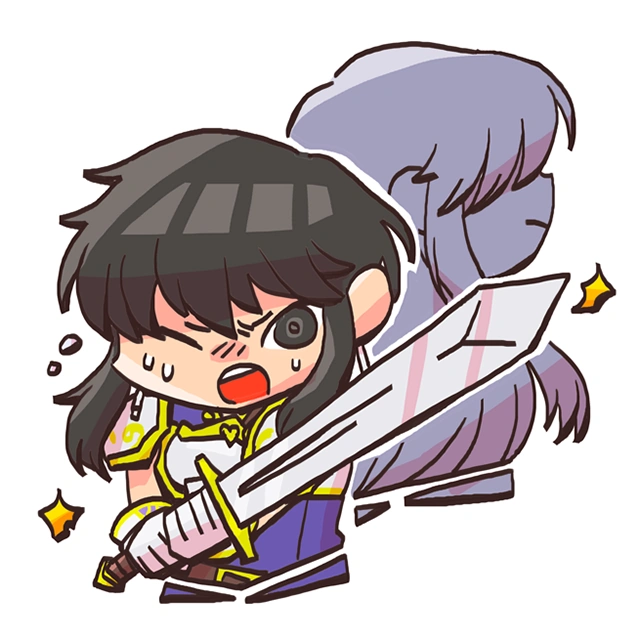
Larcei is the daughter of Princess Ayra of Isaach, and she too is a descendant of the crusader Od. Much like her ancestor, her sword-fighting skills are a cut above! | ||
|
Separated from her mother as an infant, Larcei was taken away and raised together with her brother, Scáthach. During this time, she was taught sword fighting by her cousin, Prince Shannan, and mastered her country's techniques. | ||

|
The people of Isaach suffered under the repressive rule of Grannvale. But Larcei found an opportunity to flee the empire and join Prince Seliph of Chalphy and his friends in mounting a resistance. | ||

|
A number of powerful opponents threaten to block Larcei's path, but she has an unstoppable skill at her disposal: Astra, the special technique known only to the royal family of Isaach! Larcei continues to fight, clearing the way to a brighter future. | ||
| Closely Associated Characters | |||
| Scáthach | A myrmidon of Isaach. He is the son of Princess Ayra, and Larcei's twin brother. | ||
| Shannan | Prince of Isaach and descendant of the crusader Od. Skilled wielder of the divine blade Balmung. Larcei's cousin. | ||
| Ayra | Princess of Isaach, master of the sword, and descendant of the crusader Od. She fights for her homeland. Larcei's mother. | ||
- Scion of Astra
- Daughter of Ayra and descendant of Sword Saint Od of the 12 crusaders. Appears in Fire Emblem: Genealogy of the Holy War.
Base Stats[]
Rarity: ✯✯✯✯✯
 | Title | ||||
|---|---|---|---|---|---|
| Scion of Astra | |||||
| Group | |||||
| Infantry | |||||
| Level | HP | Atk | Spd | Def | Res |
| 1 40 | 17/18/19 36/40/43 | 8/9/10 36/39/43 | 11/12/13 39/42/46 | 8/9/10 30/33/36 | 5/6/7 24/28/31 |
| Skills | Weapon | ||||
| Whirling Grace Night Sky |  Axe Axe | ||||
Skills[]
| Type | Name | Prerequisite | Default | Unlocked |
|---|---|---|---|---|
| Iron Axe | - | - | - |
| Steel Axe | - | - | - | |
| Silver Axe | - | - | - | |
| Whirling Grace | - | | | |
| Night Sky | - | - | - |
| Astra | Night Sky | - | - | |
| Regnal Astra | Astra | | - | |
| A |  Spd Def Solo 1 Spd Def Solo 1 | - | - | |
 Spd Def Solo 2 Spd Def Solo 2 | Spd Def Solo 1 | - | ||
 Spd Def Solo 3 Spd Def Solo 3 | Spd Def Solo 2 | - | ||
 Spd Def Solo 4 Spd Def Solo 4 | Spd Def Solo 3 | | ||
| B |  Frenzy 1 Frenzy 1 | - | - | |
 Frenzy 2 Frenzy 2 | Frenzy 1 | - | ||
 Frenzy 3 Frenzy 3 | Frenzy 2 | | ||
| C |  Spur Atk 1 Spur Atk 1 | - | - | |
 Drive Atk 1 Drive Atk 1 | Spur Atk 1 | - | ||
 Drive Atk 2 Drive Atk 2 | Drive Atk 1 | - | ||
 Joint Drive Atk Joint Drive Atk | Drive Atk 2 | |
Overall[]
Base Skills[]
Counters[]
Skill Inheritance Options[]
Meet Some of the Heroes[]
| Scion of Astra Larcei | |||
|---|---|---|---|

|
Larcei is from Isaach, a kingdom founded by Od, one of the 12 crusaders. As the daughter of that country's princess, Ayra, she's here to celebrate her ancestor and his allies' deeds at the Day of the Twelve festival! | ||
|
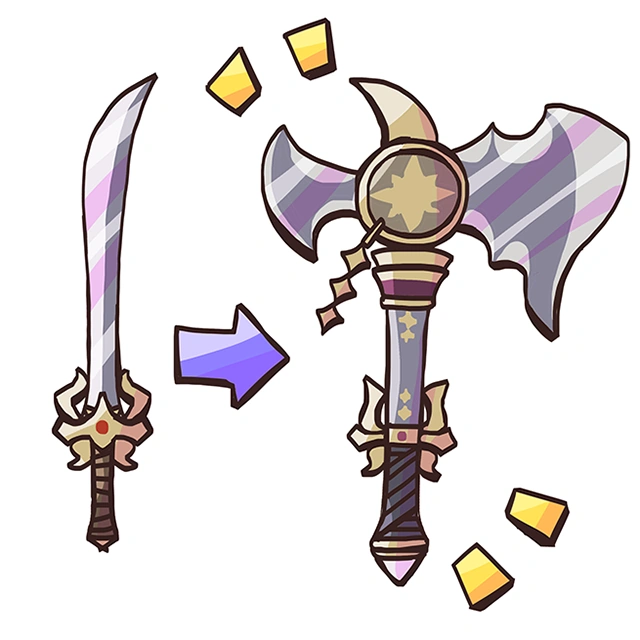
Like her ancestor, Larcei is a masterful sword fighter…but it looks like she's brought an axe with her this time! It's not a complete break with tradition though—look closely, and you'll see that the design of it is based on Balmung, Od's divine blade. | ||

|
And while she might be wearing a truly elegant outfit for the festival, you'll also notice that it's been carefully designed for ease of movement. | ||

|
It's a perfect choice for Larcei, whose agility is the greatest weapon in her arsenal. She really does follow in her ancestor's footsteps, and I can't wait to see what she can do fighting at our side! | ||
| Closely Associated Characters | |||
| Ayra | Princess of Isaach, master of the sword, and descendant of the crusader Od. She fights for her homeland. Larcei's mother. | ||
| Shannan | Prince of Isaach and descendant of the crusader Od. Skilled wielder of the divine blade Balmung. Larcei's cousin who trained her in swordplay. | ||
| Scáthach | A myrmidon of Isaach. He is the son of Princess Ayra, and Larcei's twin brother. | ||
Quotes[]
Genealogy of the Holy War[]
—Larcei's death quote
—Larcei's death quote, if she has a lover
Awakening[]
—Larcei's SpotPass parley quote
—Larcei's SpotPass battle quote
—Larcei's SpotPass recruitment quote
—Larcei's battle quote as an enemy, in Lost Bloodlines 1
—Larcei's battle quote versus Inigo in Lost Bloodlines 1
—Larcei's battle quote as an enemy, in Lost Bloodlines 3
—Larcei's battle quote versus Inigo in Lost Bloodlines 3
—Larcei's death quote as an enemy, in Lost Bloodlines 1
—Larcei's death quote as an enemy, in Lost Bloodlines 3
Heroes[]
Non-Canon Appearances[]
Fire Emblem: Light Inheritors[]
Fire Emblem: Genealogy of the Holy War (Mitsuki Oosawa Manga)[]
Fire Emblem: Genealogy of the Holy War (Nattsu Fujimori Manga)[]
Fire Emblem: Genealogy of the Holy War Gag Paradise[]
Fire Emblem: Genealogy of the Holy War - Sigurd's Tale[]
Fire Emblem: Genealogy of the Holy War - Last of the Earth Dragons[]
Fire Emblem: Genealogy of the Holy War - Forest and Lake Country[]
Fire Emblem 0 (Cipher)[]
Larcei is illustrated in the trading card game with the following cards:


Choose Your Legends Placement History[]
| Round | Placement | Character Version | Votes |
|---|
| CYL1 | 147 |  Genealogy of the Holy War |
1,876 |
| CYL2 | 169 ↓22 |
Genealogy of the Holy War |
1,508 ↓368 |
| CYL3 | 110 ↑59 |
Genealogy of the Holy War |
2,514 ↑1,006 |
| CYL4 | 171 ↓61 |
Genealogy of the Holy War |
896 ↓1,618 |
| CYL5 | 172 ↓1 |
Genealogy of the Holy War |
566 ↓330 |
| CYL6 | 175 ↓3 |
Genealogy of the Holy War |
556 ↓10 |
| CYL7 | 183 ↓8 |
Genealogy of the Holy War |
322 ↓234 |
| CYL8 | 157 ↑26 |
Genealogy of the Holy War |
429 ↑107 |
Etymology[]
Larcei's Japanese name in katakana can also be rendered as Luchtaine, a deity of art in Irish mythology. He is known to have forged the weapons used to battle the Fomorians. The change to Larcei's name in English can likely be attributed to the fact that Luchtaine is a male deity.
Trivia[]
- The Great Knight and the Warrior on Larcei's SpotPass team in Fire Emblem Awakening represent Iuchar and Iucharba, respectively.
- Larcei's portrait is an edited version of her mother, Ayra's.
Gallery[]
- See main article: Larcei/Gallery.